ServicesRoof Treatments
Roof Treatments in Colonie
Dark streaks and green moss rarely mean your roof is finished. Our low-pressure treatment kills algae, moss and lichen where they anchor and leaves the shingle granules in place. If your roof is past saving, we will tell you plainly ahead of any work.
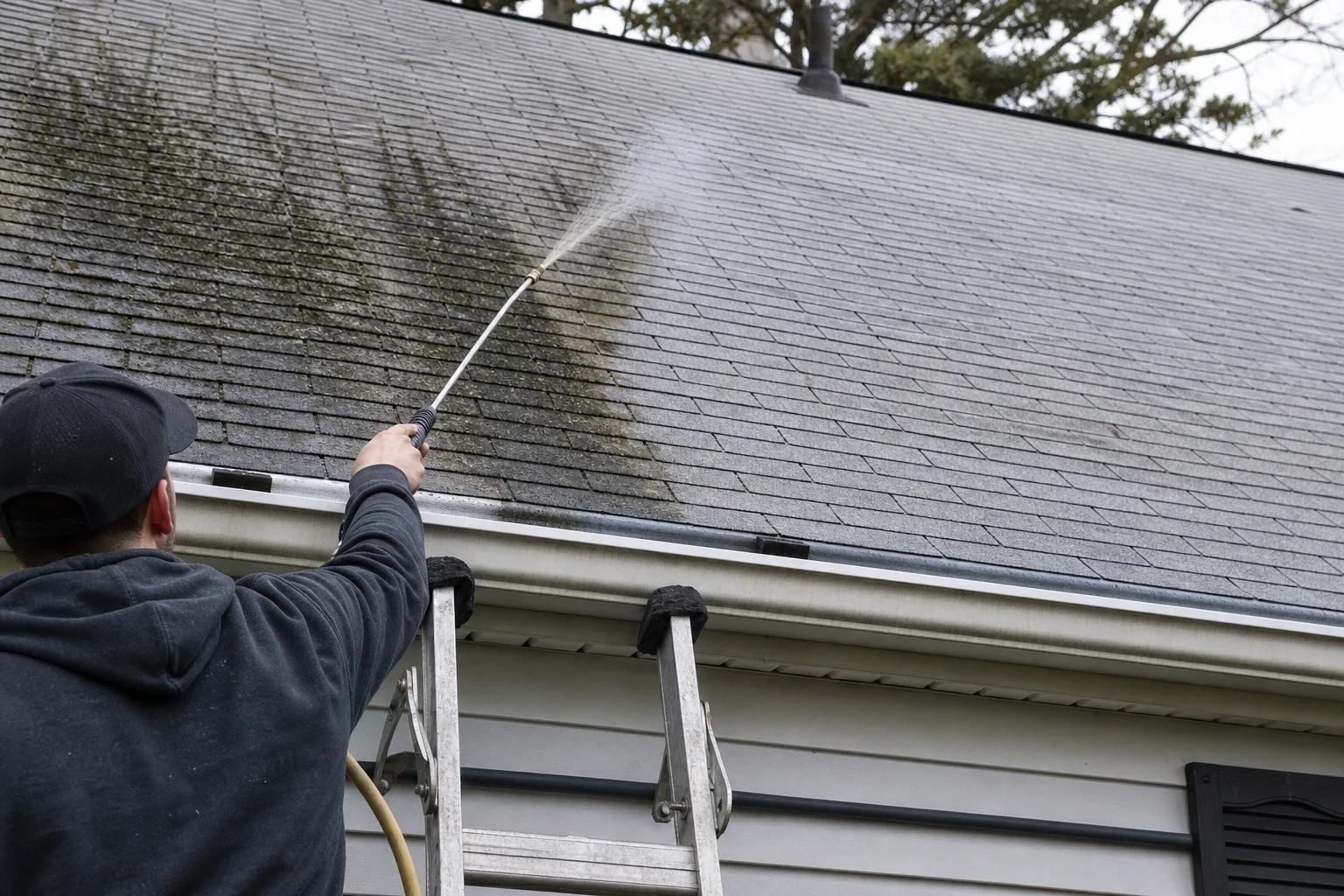
Treat the growth, keep the roof
Most of the black streaking you see on asphalt shingles is algae. It feeds on the limestone filler in the shingle and spreads downslope with every rain. Moss and lichen follow on shaded slopes, where they hold water against the roof and slowly lift shingle edges.
A roof treatment stops that cycle without the harsh pressure that strips granules and shortens a roof's life. We apply a measured solution at low pressure, let it work, and leave the surface to brighten over the following weeks of rain.
Treating first makes sense on a roof with sound shingles and only surface growth. When we see curling, cracking or bare patches where the granules are gone, we will say so and suggest you talk with a roofer before spending money on a treatment.
What a roof treatment includes
- A close look first
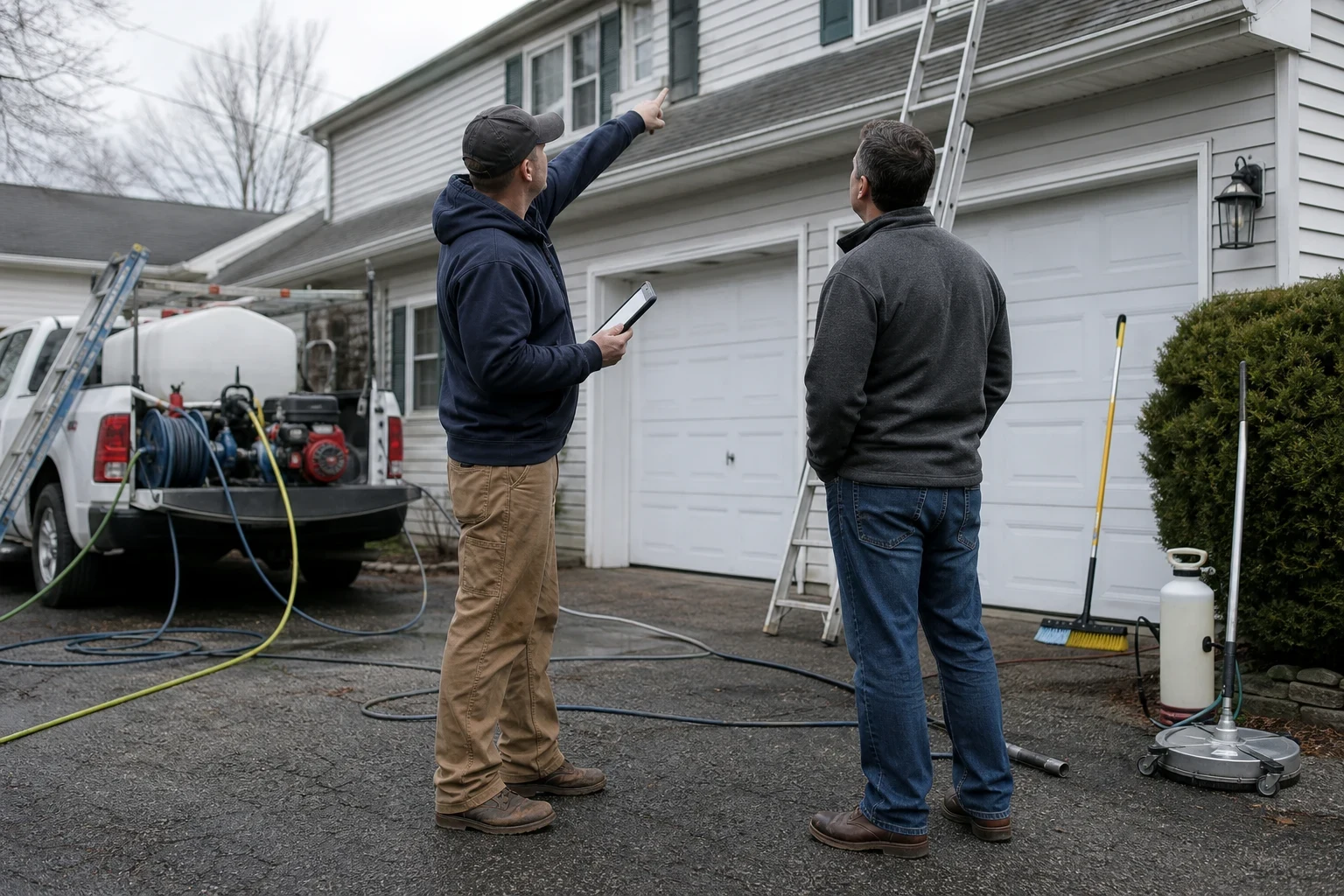
- We check the shingles, flashing and valleys for wear and photograph what we find. You see the condition of your roof before we recommend a thing.
- Gentle application, no blasting
- We use a low-flow sprayer that wets the shingles without driving into them. High-pressure equipment never goes on your roof, so the protective granules stay put.
- Moss and lichen attention
- Thick moss mats are loosened by hand with soft tools once the treatment has softened them. We never pry or scrape at shingle edges.
- Protection for plants and siding
- We wet down shrubs and beds at the start, cover delicate plantings, and rinse the siding and walkways below when we finish.
- Cleanup and a walk-through
- Loosened debris is gathered from the ground and downspout outlets. At the end of the visit, we walk you through what you will see change over the next several weeks.
Signs your roof could use a treatment
Black or gray streaks
Long dark stripes running down the slope are almost always algae. They are cosmetic at first, but they hold moisture and tend to spread.
Green moss along edges
Moss usually starts at the lower edge of shingles and in shaded valleys. Left alone, it wedges under the tabs and lets water creep in.
Crusty spots of lichen
Lichen looks like small pale or greenish rosettes and grips tightly. It is slow, stubborn, and best handled with a treatment rather than force.
A north slope that never dries
After long Capital Region winters and humid summers, the shaded side of a roof often stays damp for days. That slope is usually where growth takes hold first.
Granules collecting in the gutters
Some granule loss is normal with age. Heavy buildup alongside moss is worth a look, since it helps us tell whether treatment or replacement is the sensible next step.
What shapes the price
Every roof is quoted on its own after we see it. The quote you receive is written line by line, so you know exactly what you are paying for. Nothing is added on the day without your say.
Roof size and pitch
A larger roof takes more product and time. Steep pitches need extra rigging and care to work safely.
Height and access
Two-story homes, tight side yards and roofs over decks or porches can add setup time.
How much growth there is
Light algae streaking needs one even application. Thick moss and established lichen often need hand work and a closer second pass.
Landscaping below
Dense beds, mature shrubs and delicate plantings under the drip line mean more protection work at the start and finish.
How the day runs
- 1
Quote by phone and a visit
You get your quote by phone, and we confirm it once we have seen the roof up close. We explain whether a treatment fits your roof or whether the money is better saved.
- 2
Choosing the right weather
The treatment needs a dry day above freezing so it can sit on the shingles. We schedule within the spring-to-fall window and will move the date rather than work in the rain.
- 3
Prep and application
We protect your plants, set ladders with padded stand-offs, and apply the treatment slope by slope. Most homes are finished in a few hours.
- 4
Rinse, cleanup and follow-up
We rinse the areas below, clear debris, and leave you with clear expectations. Algae streaks fade gradually with rainfall, and dead moss loosens and washes away over the coming weeks.
Roof treatment questions
Will the treatment damage my shingles?
No, when it is done at low pressure with the right mix. The damage people worry about comes from high-pressure spraying, which blasts granules off the surface. We never use that on a roof.
How soon will my roof look better?
Moss starts to brown within days. Algae streaks fade more slowly, usually over several weeks as rain rinses the dead growth away. It is a gradual change rather than an instant one.
Do I need to keep the dog inside or move my potted plants?
Plan on keeping pets indoors until the roof and yard have dried. Before any solution goes on, we soak the beds under the drip line with plain water and drape tarps over anything delicate, so very little can settle on leaves. When the work is done, we flush the lawn, beds and walkways with fresh water. Potted plants near the house are easy to move aside, and we are glad to help with that.
How do I know if my roof needs replacing instead?
Curling or cracked shingles, widespread bare spots, and soft areas on the decking point toward replacement. We will show you photos of what we see and tell you honestly if a treatment would only buy a little time.
How many years will my roof stay clear?
Shade is the biggest variable, along with overhanging branches and how fast the surface dries after a storm. A roof in full sun can stay clean for years. Slopes under heavy tree cover usually need another treatment sooner. Once we have seen your roof, we can give you a realistic estimate.
Find out what your roof really needs
We will look at your shingles, tell you whether a treatment makes sense, and give you a clear price. If the roof is beyond it, you will hear that too.