ServicesWindow Washing
Window Washing in Colonie
We wash your windows by hand, glass to frame, with screens and tracks included. If a pane looks past saving, we check first whether careful work can bring it back, and we tell you plainly when it cannot.
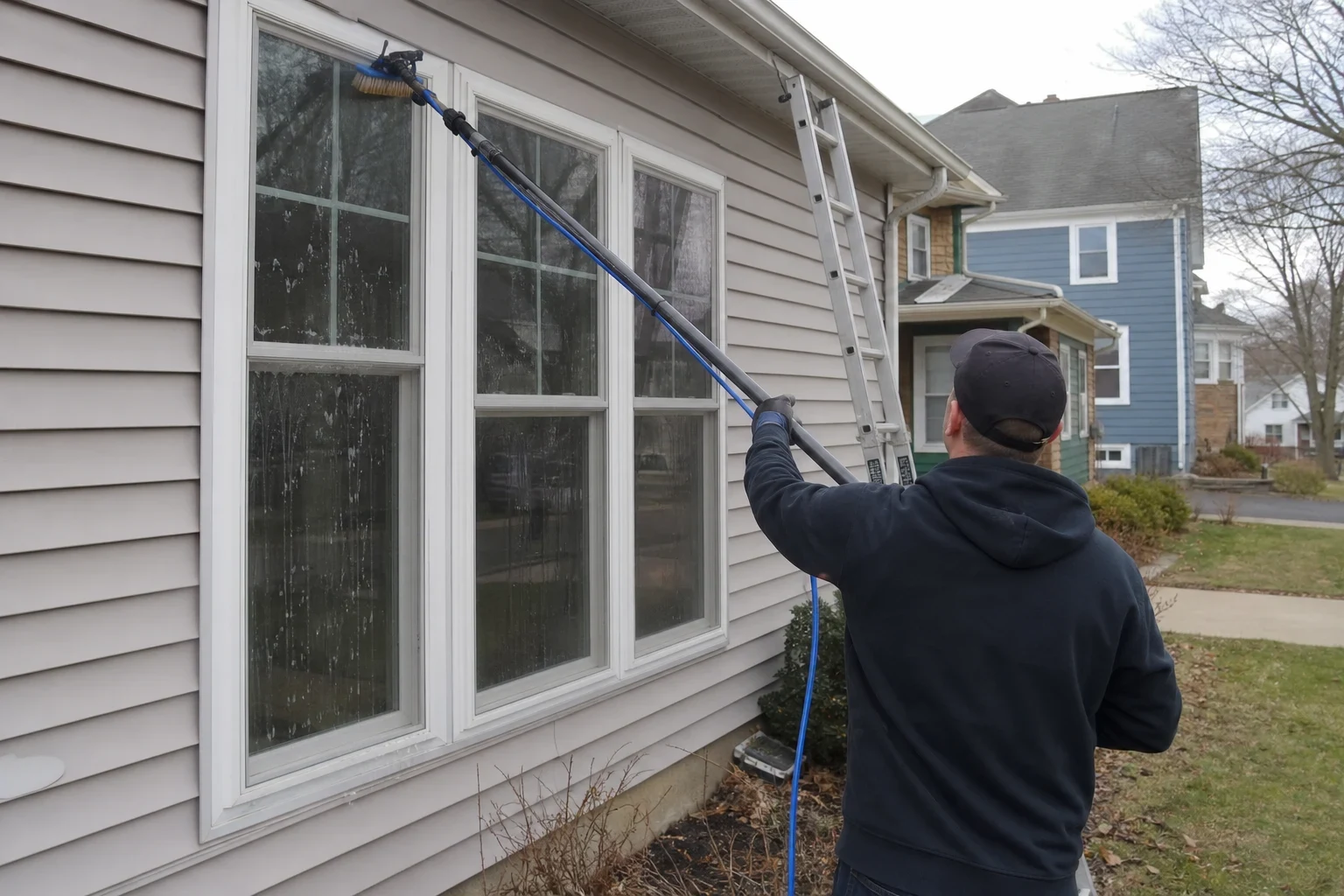
Clear glass, and an honest look at every pane
Washing windows sounds simple until you see what builds up on exterior glass over a year: pollen, sap, road film, mineral spotting from sprinklers and downspout splash. A squeegee pass alone moves some of it around. We work in stages, loosening grime first, then clearing the glass and detailing the frames so the finish looks right from the street and from your living room.
Cloudy or spotted glass is often written off as ruined. Much of the time it is hard water deposits sitting on top of the glass, and those can be lifted with the right cleaner and some time. When the haze is inside a double-pane unit or the glass itself is etched, washing will not fix it, and we will say so rather than charge you for a pass that changes nothing.
What a visit covers
- Exterior and interior glass
- We wash both faces of each pane with purified water and soft scrubbers, then finish with a squeegee and lint-free cloths. Edges and corners get detailed by hand.
- Frames and sills
- Vinyl, wood and aluminum frames each get a cleaner suited to the material. We wipe sills so dirt does not run back onto clean glass with the next rain.
- Screens
- Screens come out, get a gentle wash and rinse, and dry before going back in. Small tears or a bent frame are noted, since a minor screen repair usually beats buying new.
- Tracks and weep holes
- We vacuum and wipe sliding tracks and clear the small drain slots at the bottom of the frame. Blocked weep holes let water sit where it can damage sills.
- Hard water spot treatment
- Where mineral spotting has set in, we test a small area first, then treat the glass with a mild restoration cleaner. You see the result before we move to the rest.
Signs your windows are due
A gray film in low sun
Late afternoon light shows haze that you miss at noon. That film is usually road grime and pollen stuck fast to the glass.
White spots on lower panes
Spotting near the bottom of the glass often comes from sprinklers or splashback. Left for seasons, the minerals get harder to lift, so earlier is easier.
Sticky or gritty sliders
A door or window that drags in its track is often just packed with dirt. A thorough track wipe-out frequently fixes it without new rollers.
Fog between the panes
Moisture trapped inside a double-pane unit means the seal has failed. We will point it out so you know washing is not the answer for that window.
Screens that look gray
Dusty screens dim the light coming in and dirty the glass behind them every time it rains.
How the day goes
- 1
Walk-around and notes
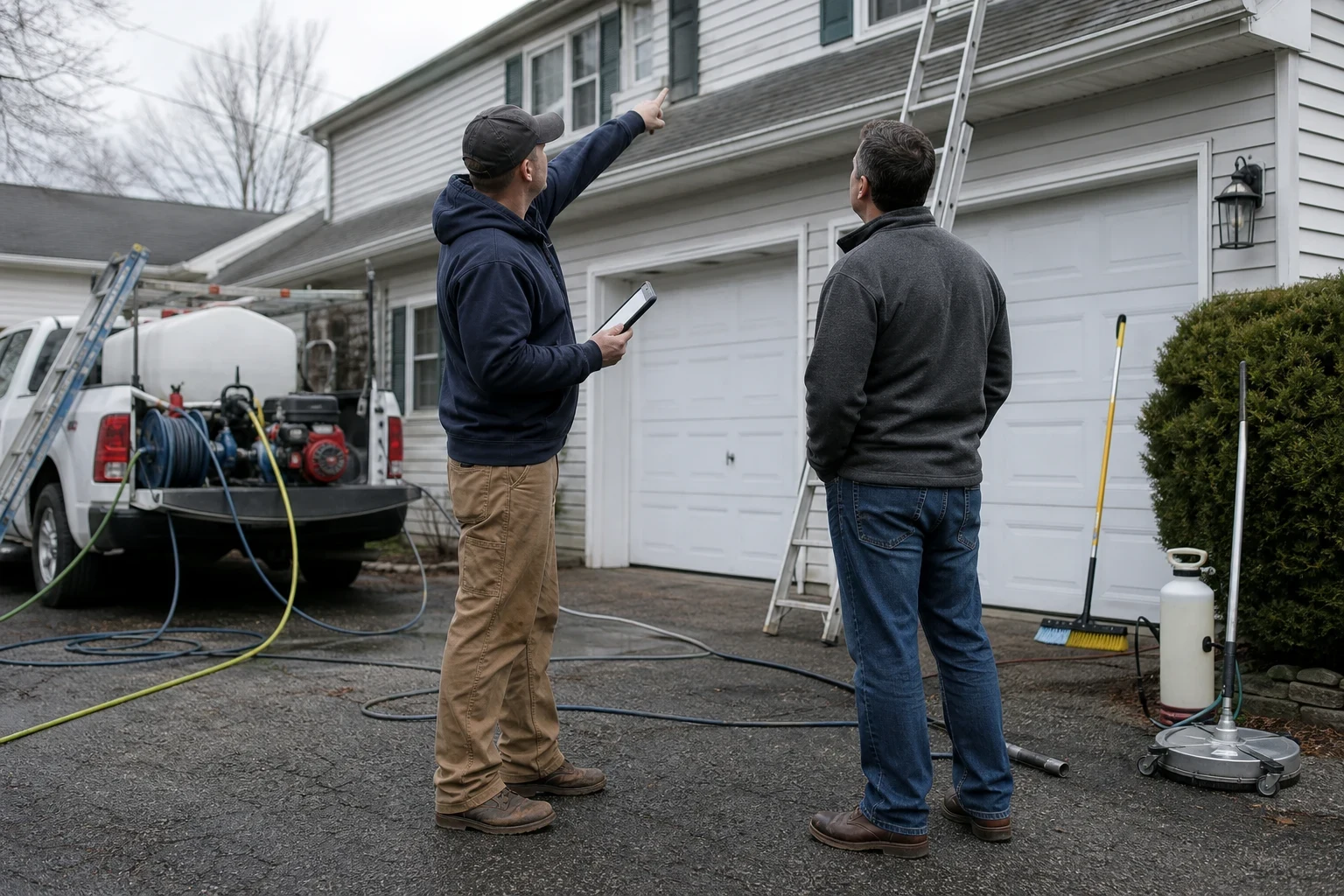
We look at every window with you, mark anything fragile, and flag stains, worn screens or failed seals before starting. You know what to expect before a drop of water hits the glass.
- 2
Protect and prep
Drop cloths go down under interior windows and we keep ladders padded where they touch siding or gutters. Furniture near the glass is moved only with your OK.
- 3
Wash in stages
Screens come out first, then glass, frames, sills and tracks. Spot treatment happens on tested panes only.
- 4
Final check together
We walk the house again in good light and redo any streak you or we catch. Screens go back in, and we leave the work area as tidy as we found it.
What shapes the price
Every quote is based on your actual windows, not a flat guess. We give it to you itemized, so you can see what each part covers and choose what matters to you. Here is what moves the number.
- Number and type of panes
- Divided-lite and French-style windows take far longer than single large panes. Storm windows add a second set of glass to wash.
- Height and access
- Second-story and dormer windows need ladders and more setup time. Windows behind dense shrubs or over a deck can also slow things down.
- Inside, outside or both
- Exterior-only visits cost less. Adding interior glass, screens and tracks adds time but gives the full result.
- Buildup and spot treatment
- Glass washed regularly goes quickly. Heavy mineral spotting or paint overspray takes careful extra work, and we price that separately so you can decide.
Questions about your windows
Something not covered here? (518) 760-0533
Can you remove the white spots from my windows?
Usually, yes. Most white spotting is mineral buildup sitting on the glass, and a mild restoration cleaner lifts it. If the spots have etched into the glass, they will not come out fully, and we will show you on a test area before doing more.
My window looks foggy even after I wash it. Can you fix that?
If the fog is between the two panes, the seal in that insulated unit has failed, and nothing we do from outside reaches it. Often the glass unit can be replaced without replacing the whole window, which is worth asking a window installer about. We will mark which ones are affected.
How often should windows be washed?
For most houses, two visits a year keep the glass in good shape. We like a spring visit after the pollen has dropped and an autumn visit before the cold sets in. Winter leaves salt spray and slush film on the lower panes, so the spring wash is usually where you notice the biggest change in the view.
Do I need to be home?
Not for outside work. If we can get around every side of the house and any gates are left unlatched, we can finish without you there. Interior glass needs someone to let us in, so we will set a time that suits your day.
Will washing damage my screens or window film?
We handle screens by hand with soft brushes and a low-pressure rinse, never a pressure washer. Tinted or low-E film gets non-abrasive cleaners and no scrapers. Tell us about any film when you call so we plan for it.
See your windows clearly again
Tell us how many windows you have and what is bothering you about them. We will talk through it and give you a clear, itemized price.